More and more often I hear the same question from clients: “I want a contemporary, comfortable interior - but one with soul. Can those go together?” They can, and combining vintage furniture with contemporary joinery is one of my favourite design moves. Here is how to do it so the result feels coherent rather than accidental.
Why mix styles?
An interior made only of new, mass-produced furniture can feel impersonal: pretty, but like a thousand other homes. A single object with history - grandma's armchair, a flea-market lamp, a 1960s chest of drawers - is enough for the interior to start telling its own story. Vintage furniture has the patina of time, one-of-a-kind proportions and a craftsmanship you will search for in vain in today's mass production.
The principles I follow
1. One strong accent per room
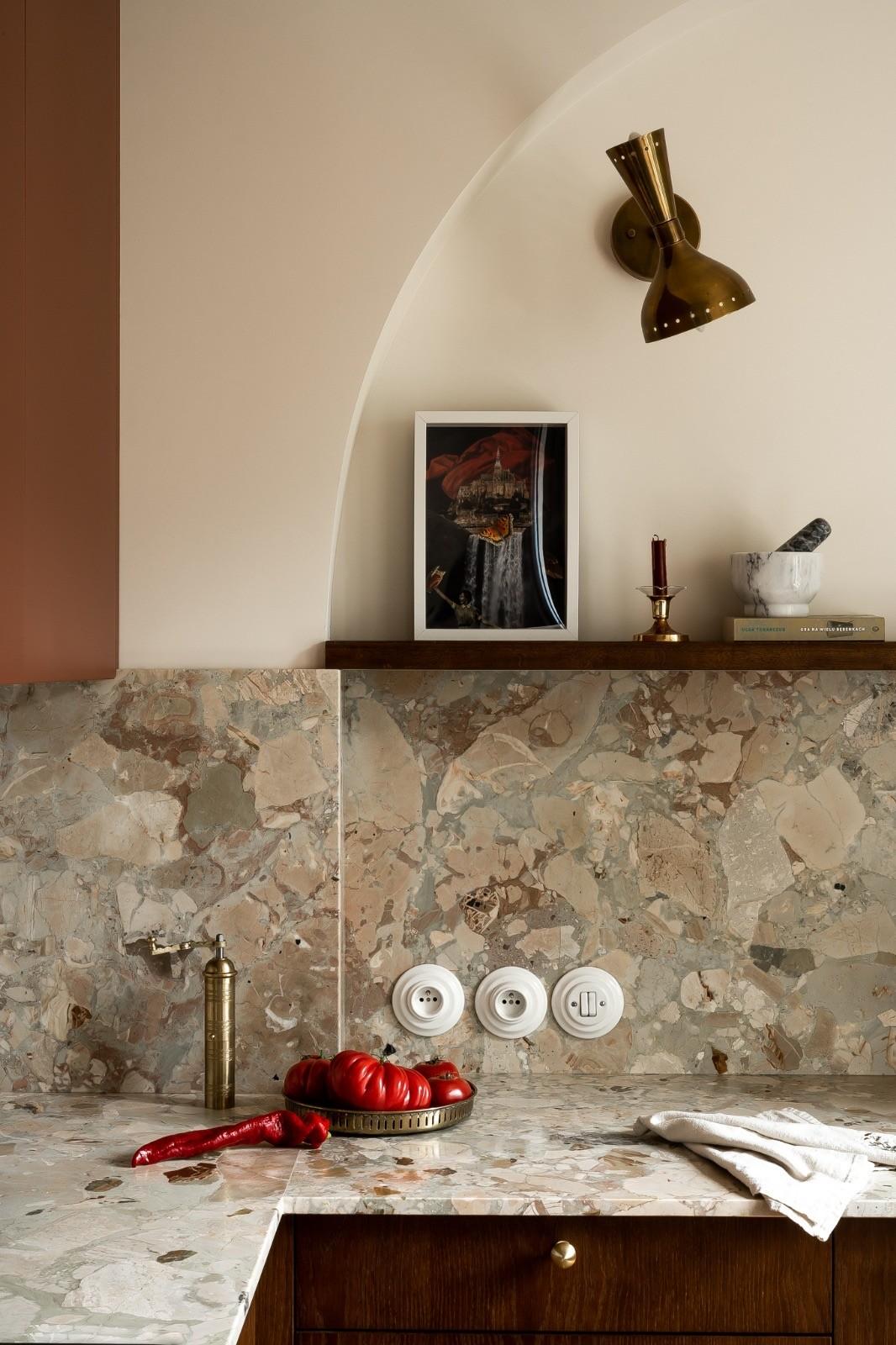
There is no need to fill the living room with antiques. Sometimes one striking piece - a display cabinet on tall legs, a chair, a mirror in an old frame - is enough to change the character of the whole room. Everything else can stay calm and contemporary. It is the contrast that makes the old piece sing.
2. A common denominator: colour and material
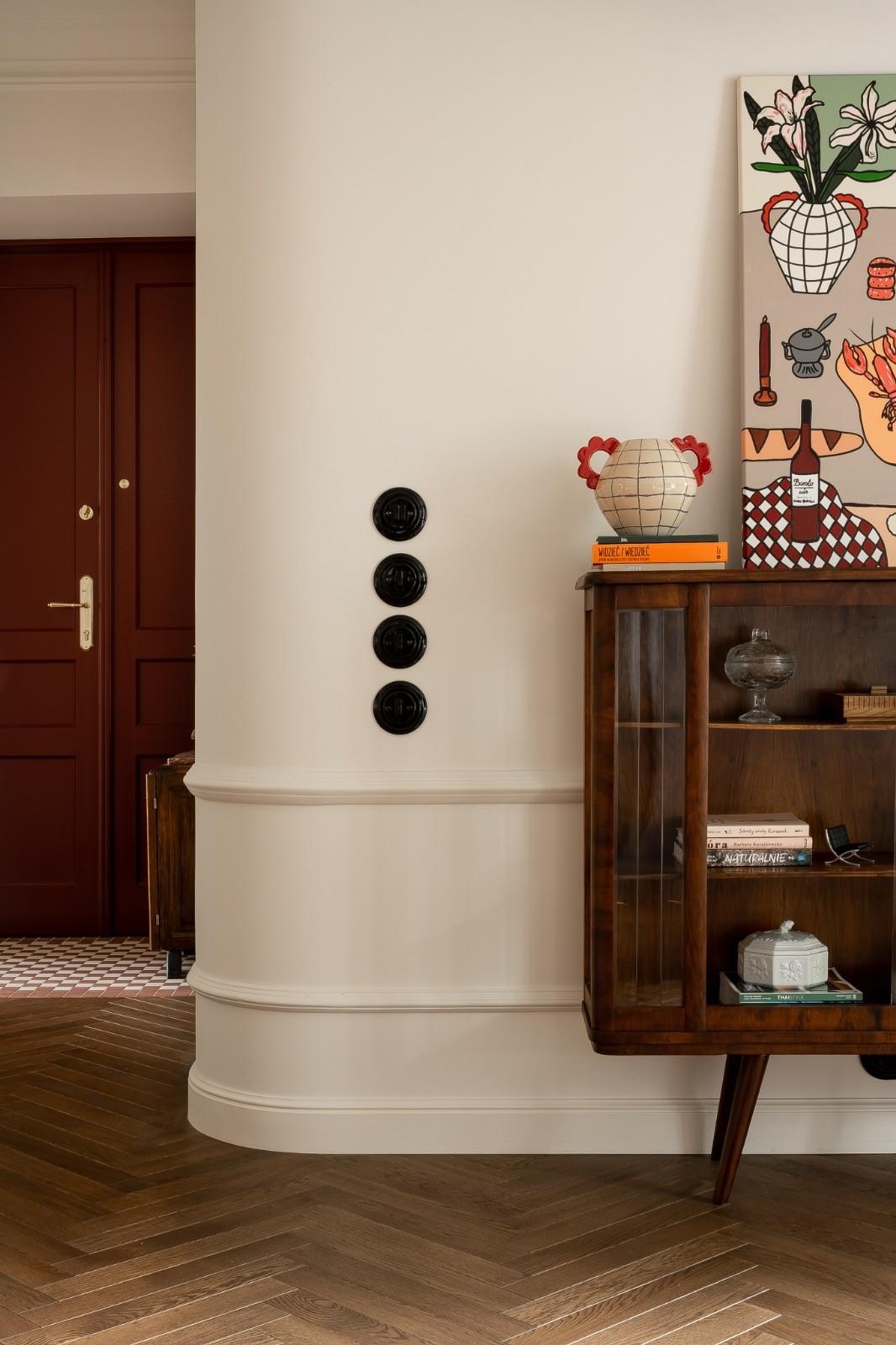
To stop old and new from clashing, I look for connecting elements. This room has several. The palette rests on three tones: the deep terracotta of the walls, the navy of the bespoke joinery and the warm brown of the wood. Brass handles and gilt picture frames repeat on both sides of the room and complete the palette.
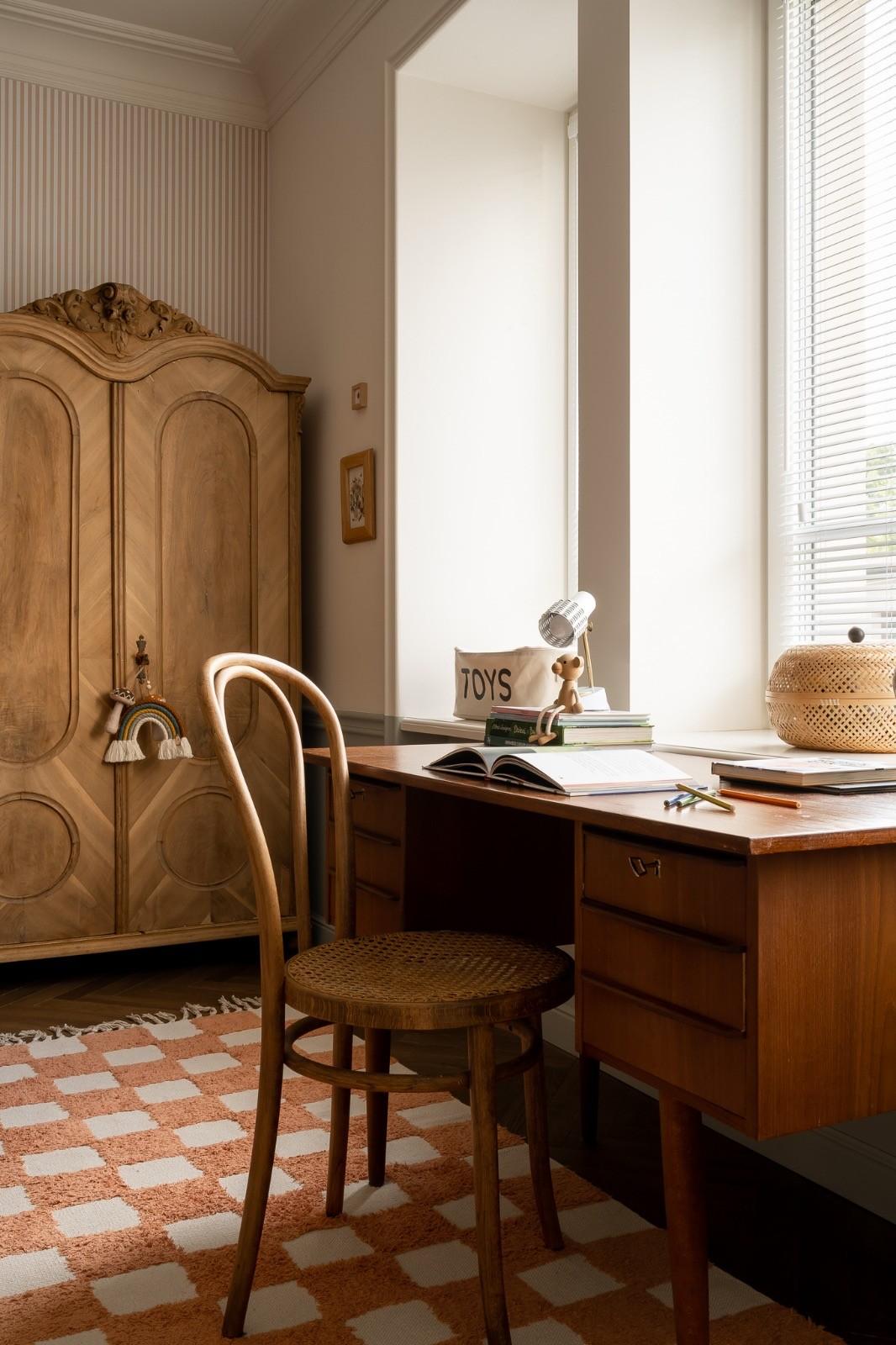
Material ties everything together even more strongly: wood returns in the desk, the Chierowski armchair, the corner bookcase and the herringbone parquet. Different tones and textures of the same material make objects from different decades look as if they had always stood together.
3. Contrasting textures
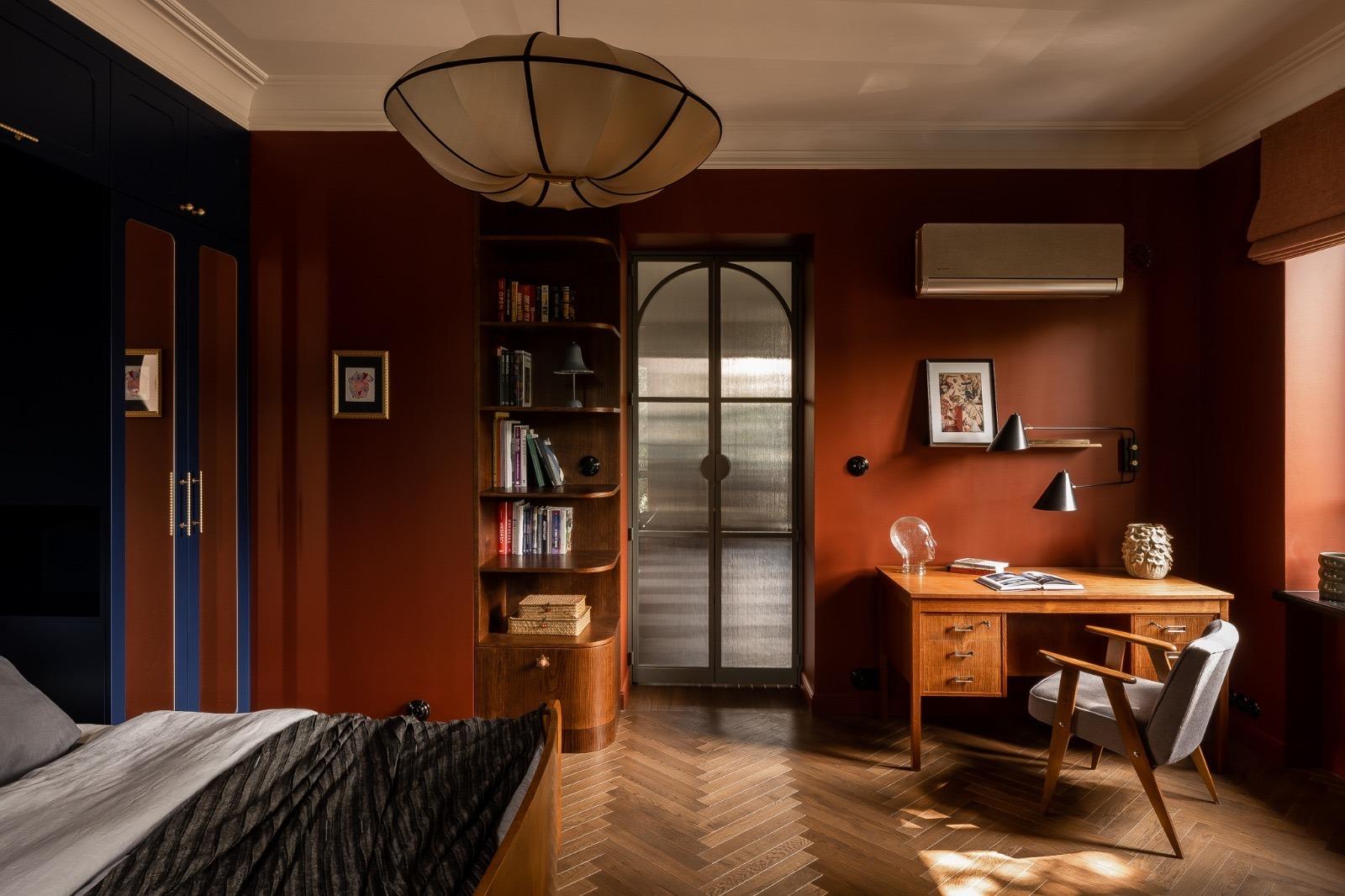
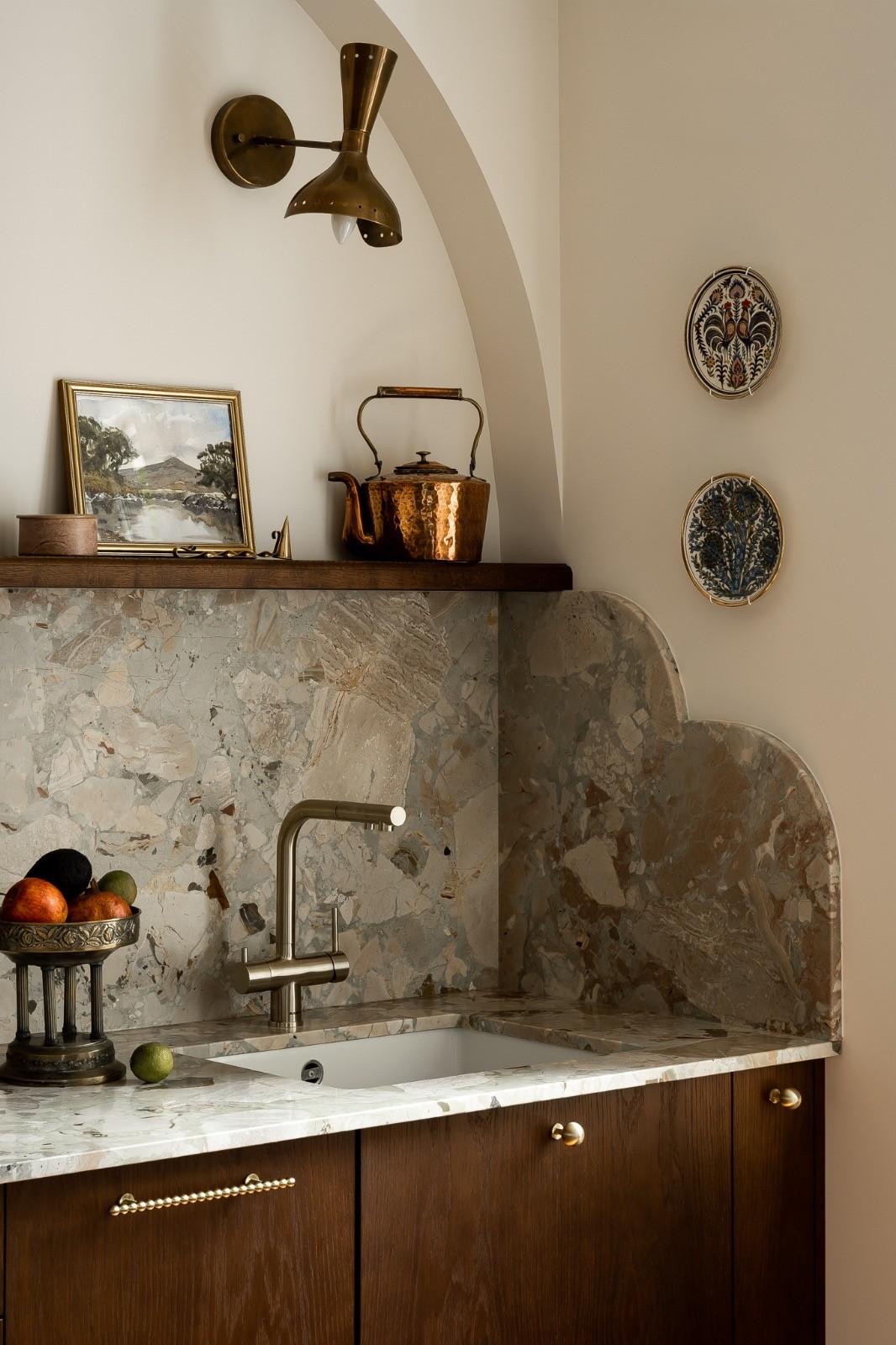
Vintage holds its own beautifully next to materials of a completely different character. In the kitchen I paired boldly veined stone, dark oak, porcelain switches and brass. Smooth beside raw, glossy beside matt, new beside full of history: that collision is what gives an interior depth.
4. Restore rather than replace
Instead of buying new, it is often worth keeping the old. The carved wardrobe, teak desk and Thonet chair with a woven seat in the child's room carry a patina and the mark of a craftsman's hand that no chain store can sell. All they need is a refresh and a new place.
5. Accessories as the link
If larger vintage pieces feel daunting, start with small things: a copper kettle, brass lamps, a watercolour in a gilt frame, ceramic plates. It is the simplest way to smuggle character into a contemporary interior without the risk of overloading it.
How it works in practice: Kamienica 1934
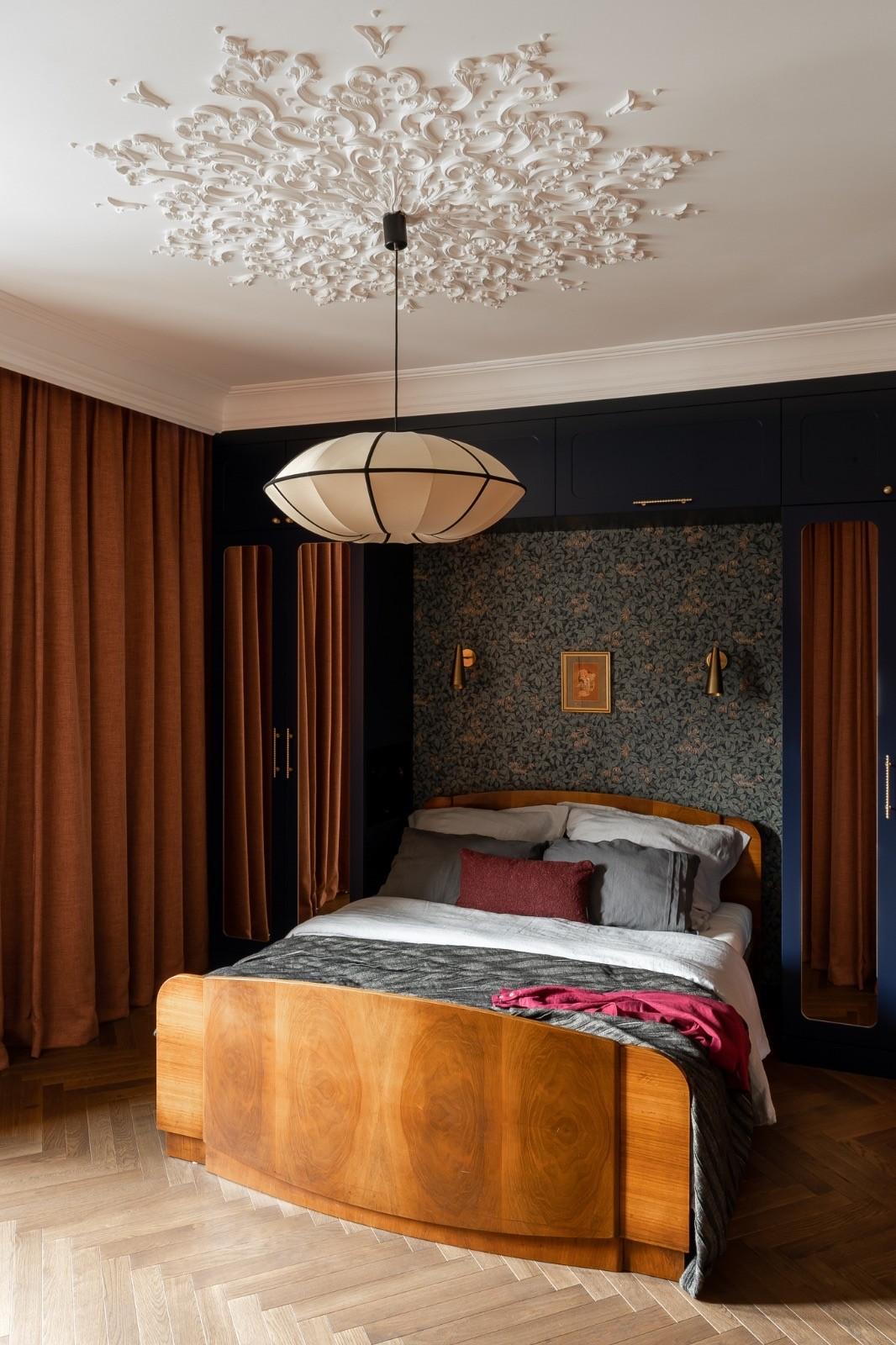
My own apartment in Kamienica 1934 in Stare Włochy shows it best. During the renovation I kept and restored the original details - the plasterwork, ceiling roses and herringbone floor - and added contemporary bespoke joinery in bold colours. Into that frame went furniture and objects with history: a 1950s bed, wardrobes, a desk, lamps and porcelain. The result feels fresh, yet it has a distinct character and a memory of the place.
Summary
Vintage furniture in a modern interior is not chaos but a deliberate composition. The key is restraint, a common denominator linking old and new, and the courage to let one exceptional object tell the story of the whole space.
Text: Katarzyna Uziembło, architect, Duet Studio. Session photos: Pietruszka Fotografia, styling: Ewa Alicja Jezierska